
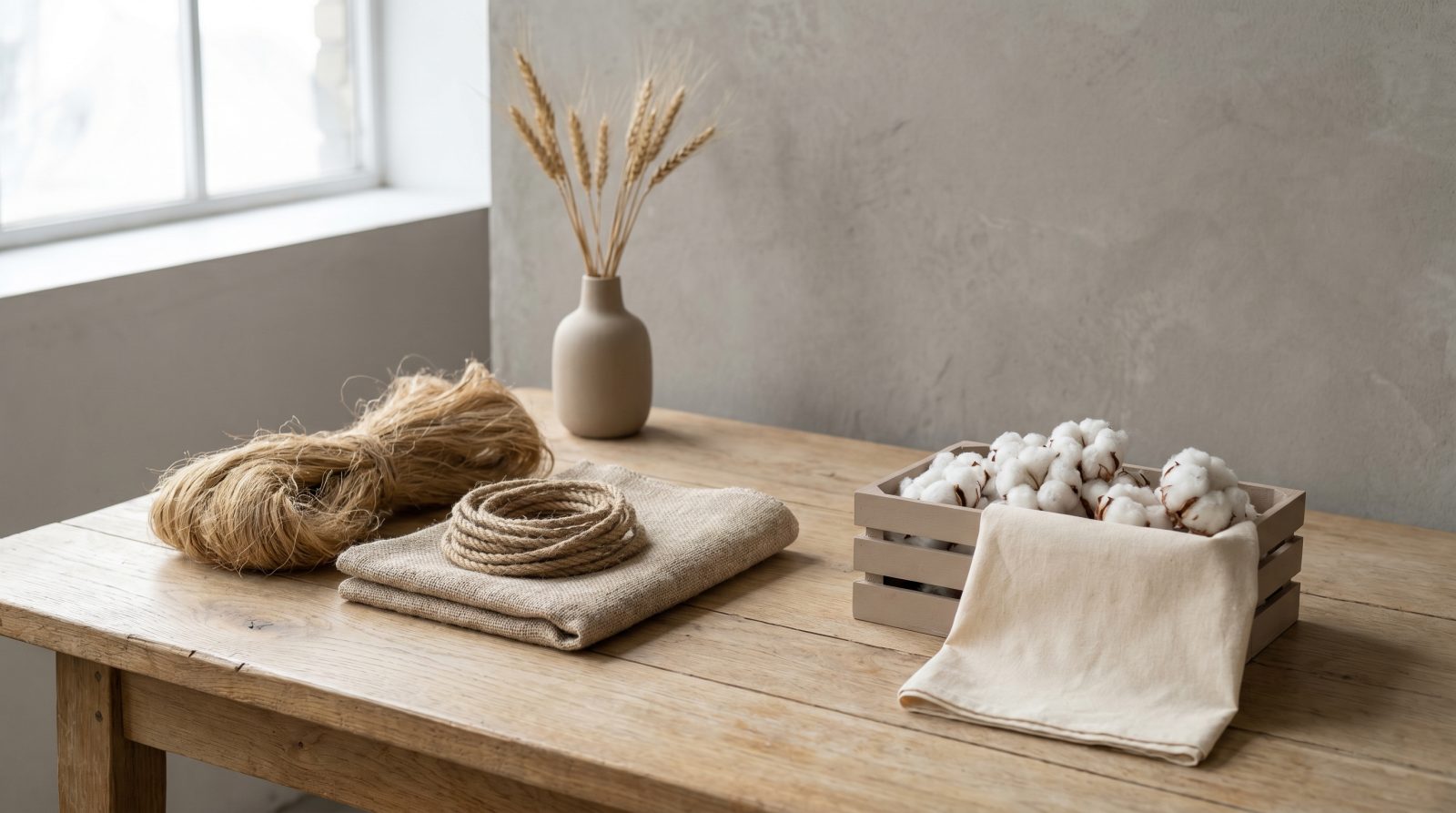
Hemp fibre and cotton are both natural plant fibres used for clothing and textiles, but they differ substantially in cultivation, processing, performance, and environmental footprint. This comparison helps consumers and buyers understand when each material is preferable. Both have their place in modern textile applications.
Direct comparison
| Attribute | Hemp | Conventional cotton |
|---|---|---|
| Fibre length | 10-50mm (bast fibre) | 10-50mm (short fibre) |
| Yield per acre | 800-1500 lbs fibre | 800-1000 lbs lint |
| Water requirement | Approximately 1/3 of cotton's | High; among most water-intensive crops |
| Pesticide use | Minimal (hemp resists most pests) | High; uses approximately 25% of global insecticide |
| Soil impact | Improves soil structure with deep taproot | Depletes soil; requires significant fertilization |
| Carbon sequestration | 5-10 tonnes CO2 per acre per growing season | Lower (varies by management) |
| Strength | Significantly stronger than cotton (2-3x) | Moderate strength |
| Durability | Lasts longer; gains softness with use | Wears out over time |
| Breathability | Excellent (linen-like) | Good |
| Heat regulation | Naturally regulating | Less effective in extreme conditions |
| UV protection | Natural UV blocking | Less UV protection |
| Antimicrobial | Naturally resistant | Requires chemical treatment |
| Processing complexity | Higher; specialized equipment needed | Mature, scaled infrastructure |
| Cost | Higher (smaller industry scale) | Lower (commodity scale) |
| Shrinkage | Minimal | Common (5-10%) |
Where hemp wins decisively
Environmental footprint
Cotton cultivation has well-documented environmental concerns:
- Uses approximately 8-10% of global pesticide application despite being only 2-3% of cropland
- Requires 1,500-2,400 gallons of water per pound of cotton produced
- Conventional cotton typically depletes soil nutrients
- Cotton-growing regions often face water scarcity issues
Hemp typically requires significantly less water, minimal pesticides, and improves rather than depletes soil. For consumers prioritizing environmental impact, hemp is the clearer choice.
Durability
Hemp fibre is meaningfully stronger than cotton. Hemp clothing typically:
- Lasts 2-3 times longer than equivalent cotton clothing
- Resists tearing better
- Maintains shape over time
- Softens with use rather than degrading
For consumers buying clothing to last, hemp's durability has compounding value.
Performance attributes
Hemp clothing typically outperforms cotton on:
- Moisture wicking (keeps wearer drier)
- Temperature regulation (keeps cool in heat, warm in cold)
- UV protection (without treatment)
- Antimicrobial properties (less odour buildup)
- Shape retention
Where cotton wins
Cost
Cotton remains substantially cheaper per pound of finished textile due to industrial scale. For mass-market apparel where cost is the primary concern, cotton is the dominant choice.
Softness (initially)
Cotton is softer to the touch initially, particularly higher-quality cotton like Egyptian or Pima. Hemp tends to soften over wear and washing rather than starting soft.
Variety of available styles
Cotton apparel is available in virtually every imaginable style. Hemp clothing options, while growing, are still narrower.
Established manufacturing
The cotton industry has decades of optimized processing, dyeing, and finishing techniques. Hemp processing infrastructure is smaller and less standardized.
Specific applications
Cotton excels in:
- Underwear and intimate apparel (softness preferred)
- Baby clothing (familiarity, softness)
- Fine dress shirts
- Delicate fabrics like voile or batiste
The blend question
Many hemp products in the market are not 100% hemp but blends:
- Hemp-cotton blends: Combine hemp's durability with cotton's softness
- Hemp-recycled polyester: Adds stretch and softness
- Hemp-linen blends: Two long-fibre crops complementing each other
- Hemp-Tencel/lyocell: Modern processing combined with hemp's properties
Blends can address some of hemp's weaknesses (softness, cost) while preserving its advantages. They are often the dominant product format in actual retail.
Organic cotton vs hemp
For environmentally-conscious consumers, the most direct comparison is hemp vs organic cotton:
| Attribute | Hemp | Organic cotton |
|---|---|---|
| Water | Lower | Slightly lower than conventional cotton |
| Pesticide | Minimal | None (by definition) |
| Soil impact | Improves | Better than conventional cotton |
| Yield per acre | Higher | Lower than conventional cotton |
| Cost | High | High (premium over conventional) |
| Durability | Higher | Same as conventional cotton |
Hemp generally remains preferable environmentally even compared to organic cotton, primarily because of yield per acre and water usage.
Buying recommendations
If you want maximum environmental benefit
- Look for 100% hemp products (or hemp-organic cotton blends)
- Consider hemp from sustainable producers
- Avoid hemp grown with conventional chemical inputs
- Buy products designed to last (hemp's durability matters here)
If you want durability over time
Hemp clothing investment pays off over the life of the garment. Initial cost is offset by years of use.
If cost is the primary concern
Cotton remains the lower-cost option for most categories. Hemp's environmental and durability benefits don't always outweigh cost for budget-conscious purchases.
For specific use cases
- T-shirts and casual wear: Hemp is competitive with cotton
- Work clothes: Hemp's durability is valuable
- Bedding: Hemp linens last longer; cotton initial softness is preferred by some
- Outdoor gear: Hemp's strength and UV protection are useful
- Underwear: Cotton softness usually preferred
- Athletic wear: Both options exist; hemp's moisture wicking is valuable
The Canadian hemp textile market
In Canada, hemp textiles remain a niche but growing segment. Most hemp clothing is imported (often from Asia or Europe where hemp processing is more developed). Canadian-grown hemp fibre is primarily processed for industrial applications rather than textiles, with most fibre exported. As Canadian hemp processing infrastructure develops, more domestic hemp textile production is possible but currently limited.