
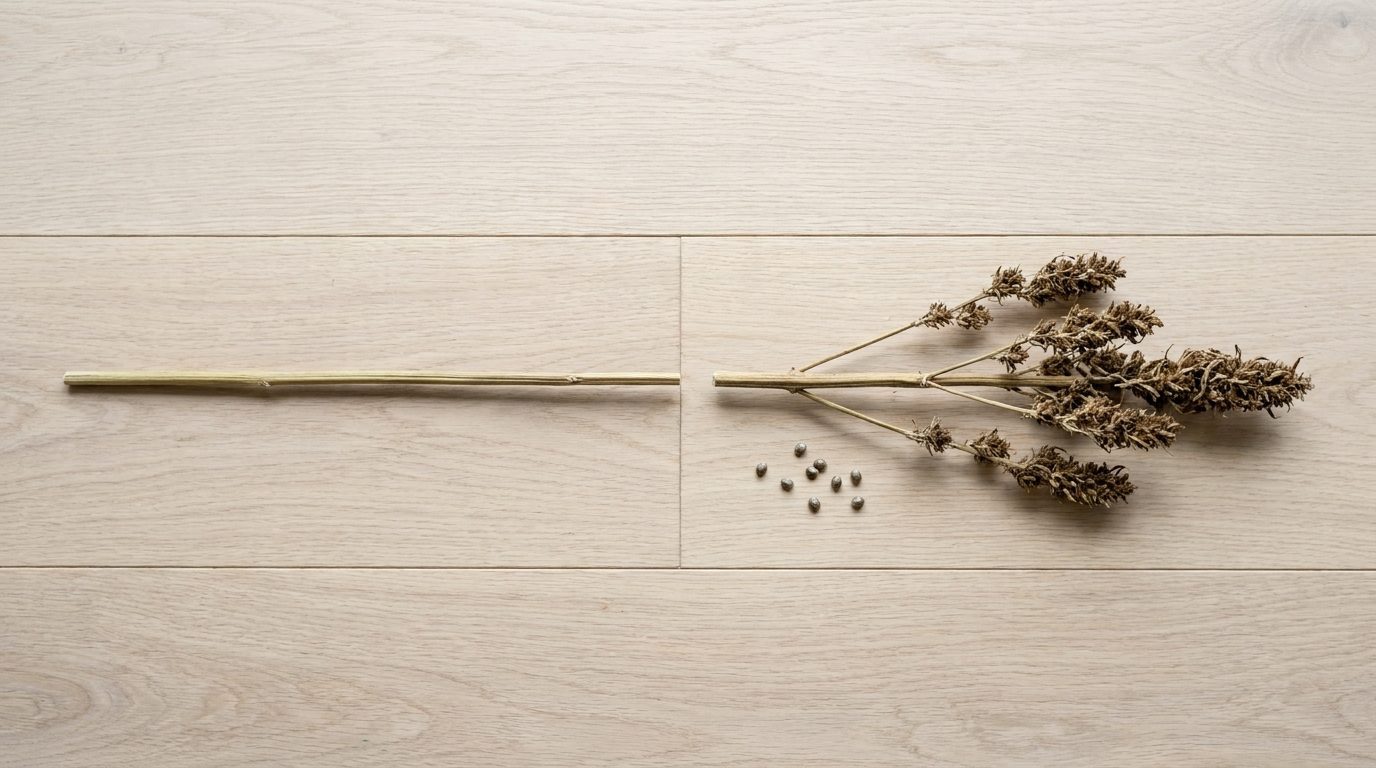
Fibre hemp and grain hemp are the same species grown for opposite goals, and the stalk tells you which one the farmer was after long before a decorticator does. The decisive choices happen at seeding and at harvest, not at the bale.
One species, three farming jobs
Cultivars are bred for a purpose. Fibre types are selected to grow tall and straight, to branch as little as possible, and to flower late, because every day of vegetative growth adds stalk length. Grain types are shorter and earlier, putting their energy into seed set and finishing in time for a reliable harvest. Dual-purpose cultivars sit in between, aiming for a usable seed yield on a stalk that is still worth baling.
Day length drives all of it. Hemp is photoperiod sensitive, so a cultivar bred for one latitude can bolt to flower prematurely or refuse to finish at another. Canadian production has historically leaned toward grain and, more recently, toward cannabinoid crops, which means the cultivars easiest to source here are frequently not the ones a textile buyer would specify. That is a supply constraint worth confirming before a fibre contract is signed.
Why seeding rate is the biggest lever
Plant population does more to shape a fibre crop than almost anything else. A dense stand forces plants to compete for light, which suppresses branching, lengthens internodes and produces thin, uniform stalks with a comparatively high proportion of bast. Thin stalks also ret more evenly and feed through processing equipment more predictably.
A thin stand does the opposite. Plants branch, stalks thicken, and the extra diameter is mostly woody core rather than bast. Thick stalks make excellent hurd and poor textile fibre: the bast that is there tends to be coarse, the branches leave knots and shive in the line, and the stems dry unevenly in the windrow. Grain growers seed thinner on purpose, because branching means more seed heads.
Harvest timing is the real divider
Fibre quality peaks earlier than the plant does. Around flowering, bast fibre is at its finest and least lignified, and the fibre that is present is largely primary fibre laid down during elongation. Let the crop stand into seed fill and the plant thickens its walls, deposits secondary fibre and more lignin, and the fibre coarsens even as total tonnage climbs.
A grain harvest necessarily waits for the seed. By the time a combine goes through, the stalk has passed the point where fine textile fibre was available. Nothing about the straw is ruined, but its market has changed: it is now a hurd and short-fibre feedstock rather than a spinning feedstock.
What dual-purpose actually gives you
Combining for seed and baling the residue is the most common real-world arrangement, and it is genuinely useful as long as expectations are set correctly. What you get is over-mature straw that is coarse, more lignified, cut high, and often mechanically abused by the combine. It has usually spent extra weeks in the field weathering, which starts an uncontrolled ret in whatever weather autumn provides.
That straw is a legitimate raw material for hurd markets, animal bedding, hempcrete and other bound-aggregate uses, nonwoven mats, moulded composites and short-fibre pulping. What it rarely is, without deliberate cultivar and management choices, is textile grade. Selling it as such damages a relationship one delivery in.
The complications nobody warns you about
- Machinery wrapping. Long tough bast wraps rotating shafts. Fibre crops chew through conventional forage and combine equipment, and modifications or dedicated headers are the norm rather than a luxury.
- Late-season retting. A dual-purpose crop rets in cooler, wetter, shorter days. Field retting slows, moulds win more often, and the window to bale dry narrows.
- Bale moisture. Fibre bales hold moisture stubbornly and heat in storage. Wet bales spoil, discolour and occasionally combust.
- Cut height. A combine leaves stubble, and stubble is stalk you have paid to grow and will not sell.
How to read a straw offer before you buy it
Whether you are a processor sourcing raw material or a builder buying hurd, the same short list separates a usable lot from a headache:
- Cultivar and stated crop purpose, plus seeding rate if the grower will share it.
- Cut date relative to flowering and whether the crop was combined first.
- Retting method, approximate duration, and how many times the windrow was turned.
- Bale moisture at baling and current storage conditions, indoors or tarped.
- Stalk diameter consistency, which you can assess by opening a bale and sorting a handful.
- Contamination: weeds, soil, stones, baler twine and stray wire, all of which are expensive at a decorticator.
The practical lesson is that a fibre crop is a decision made in spring. If a textile buyer exists, seed a fibre cultivar thickly, cut around flowering, ret deliberately, and give up the seed. If the seed is the business, plan the straw into hurd, bedding and construction markets from the start and price it accordingly. Trying to serve both markets from one field is possible, but it produces a middling result in each, and the only way that pays is if you have confirmed buyers for both halves before the drill goes in the ground. Related processing and market coverage is collected in our article index.