
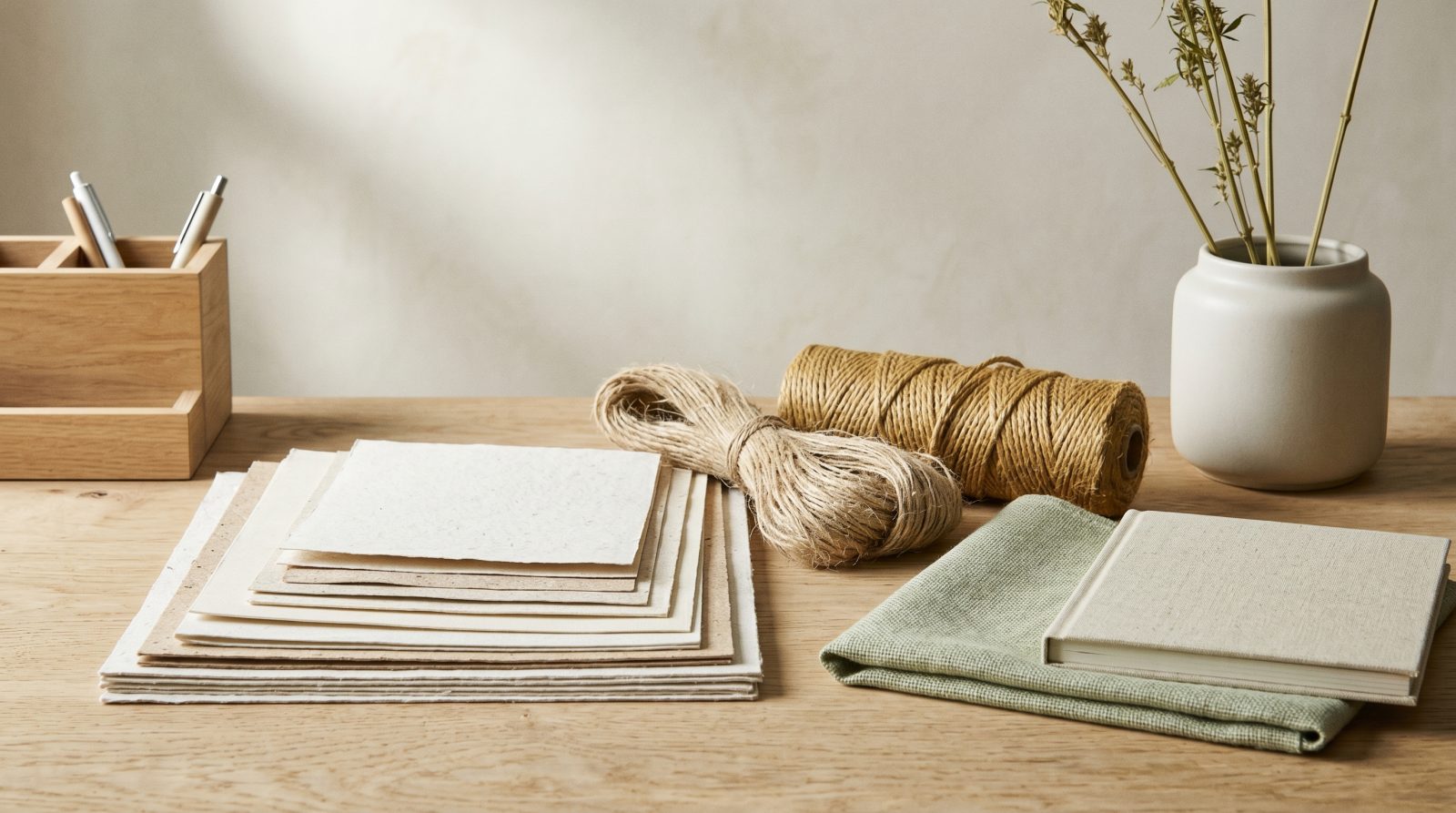
Hemp paper has experienced renewed interest in recent years as sustainability concerns drive demand for alternatives to wood-pulp paper. The honest summary: hemp paper is technically excellent and economically niche, which is why it thrives in specialty applications rather than the office printer tray.
What hemp paper is
Hemp paper is paper made from hemp bast fibres. The production process is similar to other natural-fibre paper but uses long hemp fibres as the source. The resulting paper has characteristics distinct from typical wood-pulp paper.
Properties of hemp paper
- Longevity: Hemp paper can last centuries without yellowing or becoming brittle
- Tear resistance: Long fibres produce paper that resists tearing
- Foldability: Can be folded many times without breaking
- Whiteness: Naturally lighter than wood pulp, requires less bleaching
- Translucency: Can be made thin while remaining strong
- Acid-free: Naturally acid-free, supports archival use
- Texture: Slightly different feel than wood-pulp paper, often described as more "natural"
Where hemp paper is used
Cigarette papers
The largest commercial application of hemp paper. Hemp's thin, flavour-neutral character suits rolling papers. Most rolling paper brands include hemp-based options. This is a relatively niche market in absolute terms but dominates hemp paper production.
Archival documents
Hemp paper's longevity makes it valuable for:
- Important documents intended to last centuries
- Legal documents
- Genealogy and historical records
- Art prints intended to be preserved
- Wedding certificates and family documents
Banknote paper
Many country's banknotes use cotton-based paper, sometimes blended with hemp or linen. The durability requirements of banknotes favour natural fibre papers. Pure hemp banknotes are rare; blends are more common.
Specialty stationery
Premium stationery uses hemp paper for:
- Letter paper and envelopes
- Business cards (premium positioning)
- Wedding invitations
- Art portfolios
- Custom stationery for businesses emphasizing sustainability
Bible paper
Religious texts often use very thin paper that must remain strong. Hemp paper's combination of thinness and durability makes it ideal for this application. Many bibles use hemp paper or hemp blends.
Tea bag and filter papers
Tea bag paper requires food-safe natural fibres that retain water properties without falling apart. Hemp paper, sometimes blended with other fibres, meets these requirements.
Art papers
Watercolour paper, calligraphy paper, and printmaking paper benefit from hemp's properties:
- Holds water without warping
- Takes ink and watercolour well
- Lasts archive-quality
- Available in multiple weights and finishes
How hemp paper differs from wood-pulp paper
Strength and durability
Hemp paper is consistently stronger than wood-pulp paper:
- Tear strength is 2-3x higher
- Folding endurance is significantly greater
- Aging stability is much better
Manufacturing process
Hemp paper production requires:
- Different mechanical setup than wood-pulp paper
- Less bleaching due to lighter natural colour
- Different chemical processing
- Smaller production runs are common (specialty market)
Environmental footprint
The environmental comparison depends on specific production methods:
- Hemp paper: Annual crop, less water, less pesticide, less bleaching needed
- Wood pulp paper: Decades-long tree growth, can be sustainably managed, larger infrastructure exists for recycling
Modern sustainable forestry can produce paper sustainably. For hemp paper to have substantial environmental advantage requires both sustainable hemp cultivation and modern processing.
Cost
Hemp paper costs significantly more than wood-pulp paper. The premium ranges from 2x for specialty applications to 10x or more for premium archival-grade hemp paper.
The Canadian hemp paper market
Production
Canada has minimal industrial-scale hemp paper production. The infrastructure for large-scale hemp pulping does not exist in Canada. Specialty paper makers occasionally produce hemp papers for art markets, but commercial-scale hemp paper for general use is essentially absent.
Imports
Most "hemp paper" sold in Canada is imported from:
- Europe (France, Spain, Italy)
- Asia (China, India)
- Some US specialty makers
Where to find hemp paper in Canada
- Online specialty paper retailers
- Art supply stores (premium watercolour and printmaking papers)
- Specialty stationery retailers
- Direct from international specialty paper makers
- Wedding invitation suppliers (custom printing)
Cost expectations
| Paper type | Wood-pulp price | Hemp paper price |
|---|---|---|
| Standard letter paper (per ream) | $5-15 | $25-80 |
| Premium watercolour paper | $30-80 | $80-200 |
| Archival stationery (per pack) | $10-25 | $30-90 |
| Cardstock for art prints | $15-40 | $50-150 |
| Wedding invitations (per 100) | $200-500 | $400-1200 |
When hemp paper makes sense
- When document longevity matters (centuries-scale storage)
- For art prints intended to be preserved
- For premium positioning (high-end stationery, wedding invitations)
- When environmental impact is a key buying consideration
- For specific applications requiring strength and thinness (cigarette papers, bible paper)
- For ceremonial or significant documents
When wood-pulp paper makes more sense
- For everyday office paper
- For high-volume printing
- For mass-market publications
- When cost is the primary concern
- For paper that will be recycled rather than archived
- For school or general consumer use
The future of hemp paper
Several trends could increase hemp paper availability and decrease cost:
- Growing demand for sustainable paper products
- Investment in industrial hemp processing infrastructure
- Premium positioning becoming mainstream in specific markets
- Improvements in hemp paper manufacturing technology
- Carbon footprint considerations driving institutional adoption
For now, hemp paper remains a specialty premium product. For mass-market needs, wood-pulp paper remains the dominant choice. For specific applications where its properties matter most, hemp paper offers genuine value.